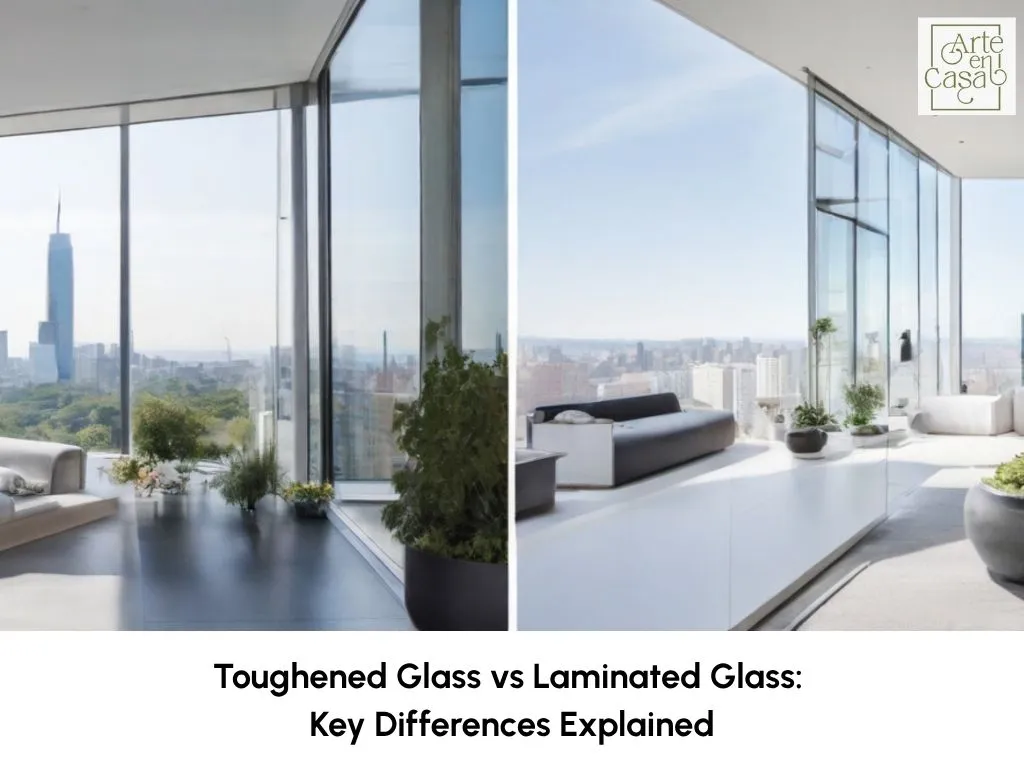
Glass is among the most load-bearing decisions in a luxury interior, and the sliding wardrobe door is where that decision is most visible. The panel carries structural load, interacts with light across the day, and determines what happens to the space if it ever faces an impact. Two types of safety glass define most specifications in this context: toughened glass and laminated glass. Both are significantly safer than ordinary glass, yet each achieves that safety through a completely different mechanism. Understanding the difference between toughened glass and laminated glass is the first step towards specifying the right material for a refined, considered interior.
Understanding Toughened Glass
To answer what is toughened glass, the manufacturing process provides the clearest starting point. Toughened glass is the material most commonly encountered in high performance interior applications.
Sliding wardrobe door panels, frameless shower enclosures, glass shelving units, and partition systems typically specify it. Its strength, visual clarity, and predictable safety behaviour on breakage make it a reliable material wherever aesthetics and performance are equally non-negotiable.
How Toughened Glass Is Made?
Standard glass is heated to approximately 620 degrees Celsius in a controlled furnace, then subjected to rapid forced cooling. This thermal process creates internal stress within the panel: the outer surfaces compress while the inner core remains in tension.
The result is a pane that is four to five times stronger than ordinary glass of the same thickness. Every cut, drill, and edge treatment must be completed before the glass enters the furnace. Once toughened, the panel cannot be cut or altered in any way.
How Toughened Glass Breaks
When toughened glass breaks, it does not produce the long, sharp shards associated with ordinary glass. The panel shatters into thousands of small, granular pieces with blunted edges. This breakage pattern significantly reduces the risk of severe laceration, which is why architects and designers specify toughened glass wherever human contact is regular and close. There is, however, a consequence worth understanding: once the panel breaks, it offers no residual barrier. The glass collapses entirely, leaving the opening fully unprotected.
What Is Laminated Glass?
To understand what is laminated glass, the key lies not in the glass itself but in what sits between its layers. Laminated glass approaches safety from the opposite direction to toughened glass. Where toughened glass is made stronger to resist breaking, laminated glass is designed to remain intact after it breaks. The difference between toughened and laminated glass, in practical terms, comes down to this: one shatters and clears, the other cracks and holds.
How Laminated Glass Is Made?
Laminated glass consists of two or more glass layers bonded together with a polymer interlayer. The most common interlayer material is polyvinyl butyral, known as PVB, though ethylene vinyl acetate is also used in specific applications. The layers are bonded under heat and pressure in an autoclave, which fuses the interlayer chemically to the glass on both sides.
This bonding process preserves the optical clarity of the finished panel, a critical quality standard for wardrobe glass and architectural glazing.
How Laminated Glass Breaks?
Under impact, laminated glass fractures across its surface in a web formation. The interlayer holds every fragment in place. The panel remains in the frame; nothing scatters and no breach opens in the surface. This is what separates laminated glass from toughened glass in terms of post-breakage behaviour. Toughened glass collapses; laminated glass holds. That physical difference determines which material belongs in which application.
Key Differences Between Toughened and Laminated Glass
Architects and designers evaluating the difference between laminated and toughened glass find that it extends across six dimensions that bear directly on luxury interior design. Both carry the classification of safety glass, and both perform significantly above ordinary glass. Where they diverge is in what they prioritise and what they cost.
| Feature | Toughened Glass | Laminated Glass |
|---|---|---|
| Strength | 4–5× stronger than ordinary glass | Depends on the glass layers used |
| Breakage | Shatters into small, blunt pieces | Cracks but remains bonded to the interlayer |
| Security | No protection after breaking | Continues to act as a barrier after cracking |
| Sound Insulation | Moderate | Better acoustic performance |
| UV Protection | ~25% UV protection | Up to 99% UV protection |
| Cost | More economical | Higher cost with added performance benefits |
When Toughened Glass Is the Right Choice for Luxury Interiors?
Most luxury sliding wardrobe systems and frameless interior glass applications specify toughened glass as the primary material. Its combination of structural strength, precision, and safe breakage behaviour makes it the appropriate choice across a wide range of interior contexts.
Sliding Wardrobe Door Panels
A toughened glass panel delivers the structural integrity to travel along a precision sliding track without flexing under its own weight. Visual accuracy matters as much as structural strength in this context. The glass must not distort reflections or introduce colour cast into the room. Collections available at Arte En Casa, such as HELIOS and CRONOS, are designed with full height glass panels, so that precision in the glass reads across the entire space.
Shower Cubicles and Enclosures
Shower cubicles consistently specify toughened glass for its thermal resistance. The material handles significant temperature differentials without risk, and its breakage behaviour produces small blunt pieces rather than sharp shards. In a wet, confined bathroom space, that distinction between a safe and a dangerous outcome at the moment of breakage is decisive.
Room Partitions and Office Partitions
Glass partition systems in aluminium framing, including demountable office partitions, also favour toughened glass. The structural demands of a partition wall require a material that absorbs lateral stress without developing micro-fractures over time. Frameless glass shelving and display units built into wardrobe interiors follow the same material logic.
When Laminated Glass Is the Right Choice for Luxury Interiors?
Laminated glass earns its premium whenever barrier integrity after breakage, acoustic performance, or UV protection takes priority over structural strength alone.
Walk In Wardrobes Requiring Acoustic Privacy
In a walk-in wardrobe positioned in a high-rise residence or an open plan home, sound management becomes a genuine design consideration. An adjacent corridor, living space, or bathroom introduces ambient noise that toughened glass transmits with limited resistance. Laminated glass with a PVB interlayer absorbs those sound vibrations and creates meaningfully quieter conditions inside the dressing area. For a client who values the wardrobe as a private, immersive space, that acoustic quality is part of the luxury.
Wardrobes Storing UV-Sensitive Materials
A wardrobe designed for silk, structured tailoring, fine leather goods, or cashmere faces a material risk that toughened glass does not adequately address. Sustained UV exposure causes colour shift and fibre degradation in fine textiles over time. Laminated glass reduces UV transmission to near zero, preserving the condition of materials stored inside the wardrobe across years of use.
Overhead Glazing and External Panels
For overhead glass elements, glass canopies, or skylights adjacent to a dressing or living area, laminated glass is the appropriate specification. Overhead glass must hold its fragments if it cracks, and only laminated glass provides that guarantee. The same principle applies to external-facing panels at lower levels where security is part of the brief.
Using Toughened and Laminated Glass Together
High performance interior installations frequently combine both glass types in a single architectural system. Each type contributes what the other cannot achieve alone.
- Outer pane: laminated glass, for UV control, security, and fragment containment after impact.
- Inner pane: toughened glass, for structural strength, thermal efficiency, and visual clarity.
- Combined result: the system delivers both impact resistance before breakage and barrier integrity after it.
This configuration suits large format sliding systems and room partition walls in premium homes, where aesthetic expectation and functional demand are equally rigorous.
How Arte En Casa Helps You Choose the Right Glass?
At Arte En Casa, the design team treats glass specification as an architectural decision, not a finishing detail. This standard holds whether the brief covers bespoke sliding systems, walk in wardrobes, frameless shower cubicles, or demountable office partitions. Each application carries different structural and performance requirements, and Arte En Casa specifies accordingly. Clients discuss glass choices during in-person consultations at the Lower Parel showroom, viewing panels and material combinations before any decision is finalised.
Conclusion
The difference between toughened and laminated glass goes beyond which material is stronger. Toughened glass leads in pre-break structural strength and suits most sliding wardrobe door panels, shower cubicles, and partition applications for its durability and predictable breakage behaviour. Laminated glass justifies its premium when post-break barrier integrity, acoustic privacy, or UV protection forms part of the design brief. In a well-considered luxury interior, both glass types may appear in different systems across the same project. Selecting the right one for each application is the mark of a design specified with genuine precision, not assembled from defaults.
FAQs
Q1: What is the main difference between toughened glass and laminated glass?
A: Toughened glass is produced by heating standard glass to approximately 620 degrees Celsius and then rapidly cooling it. That thermal process creates a panel four to five times stronger than ordinary glass. Laminated glass bonds two or more glass layers with a polymer interlayer, typically PVB. The key practical difference between toughened glass and laminated glass lies in what happens after breakage. Toughened glass shatters and the panel collapses entirely. Laminated glass cracks but the interlayer holds every fragment in place, and the panel continues to act as a barrier.
Q2: Which is stronger, toughened glass or laminated glass?
A: Toughened glass is stronger before it breaks. It resists impact and structural stress more effectively than a laminated panel of equivalent thickness. Laminated glass outperforms toughened glass after breakage: the interlayer holds the cracked panel together and it continues to function as a barrier. Strength and post-break barrier integrity are two separate criteria, and the right glass depends on which one the application demands.
Q3: Which is better for sliding wardrobe doors, toughened glass or laminated glass?
A: For most sliding wardrobe door panels, toughened glass is the appropriate specification. Its structural strength allows the panel to travel along a precision track system without flexing. The glass also maintains visual accuracy across the full height of the door, which is critical in full height panel designs. Architects and designers specify laminated glass for a walk in wardrobe when UV protection for stored garments matters, or when acoustic privacy between the dressing area and an adjacent room is part of the brief.
Q4: Can toughened glass and laminated glass be used together in the same wardrobe or partition system?
A: High performance installations frequently combine both types in a double glazed configuration. The outer pane is typically laminated glass, for UV control and post-break security. The inner pane is toughened glass, for structural strength and visual clarity. Architects specify this pairing in large format sliding systems and room partition walls where a single frame must deliver both impact resistance and barrier integrity.
Q5: Which glass type offers better sound insulation for a bedroom wardrobe, toughened or laminated glass?
A: Laminated glass offers meaningfully better sound insulation. The PVB interlayer absorbs sound vibrations, reducing ambient noise from adjacent spaces. Standard toughened glass provides limited acoustic resistance by comparison. In a walk in wardrobe adjoining a living area or open plan space, laminated glass delivers a quieter, more contained dressing environment. That acoustic containment creates a genuinely private space, not simply a sectioned corner of a larger room.